
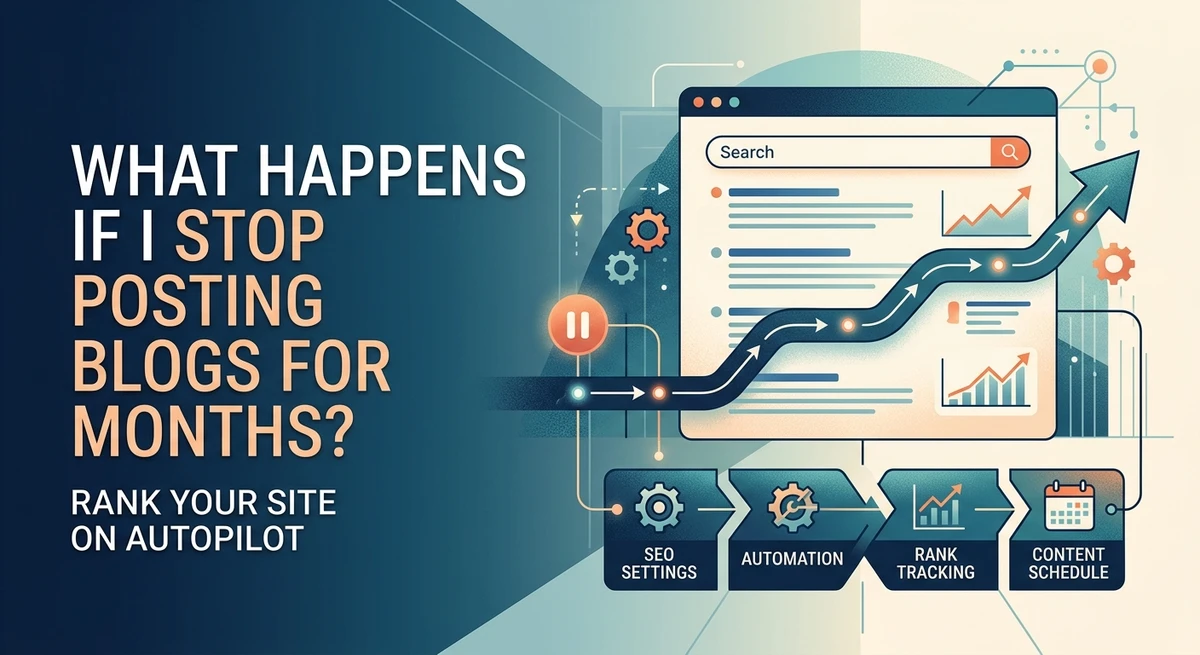
I learned this the hard way: after a clean 11-week publishing streak, one client paused content for 3 months and the stopped blogging SEO impact showed up before the traffic graph looked alarming. If you're wondering what happens if you stop publishing, the short answer is this, Google doesn't punish the pause instantly, but your site starts losing the freshness, coverage, and momentum that held those rankings together.
That matters for founders, marketers, and small teams that depend on organic search to compound. The first drop is usually not dramatic, but it's rarely harmless. A few weeks without new posts can be enough for older pages to stop growing, and a few months can turn a stable blog into a slow leak.
In our work at RankOrg, we see the pattern repeat: content cadence becomes a trust signal, then the absence of cadence becomes a signal too. The good news is that the damage is predictable, which means it’s preventable.
Why does Google notice when publishing stops?
Google notices because publishing frequency changes the shape of your site activity, not because it counts blog posts like a scoreboard. The direct answer is that fresh publishing helps Google discover new topics, reassess topical depth, and revisit your site with a stronger expectation that the content map is still active. When that stops for 8 to 12 weeks, the site can look quieter, less current, and easier to outrank.
Google doesn't need to
FAQ